This video tells the story of the Korean Christians and the boys from Seoul The piece was written by Major Leslie Condon of The Salvation Army and the piece is based on the Korean war.
Daily Christian thoughts music, poems based around God
This video tells the story of the Korean Christians and the boys from Seoul The piece was written by Major Leslie Condon of The Salvation Army and the piece is based on the Korean war.
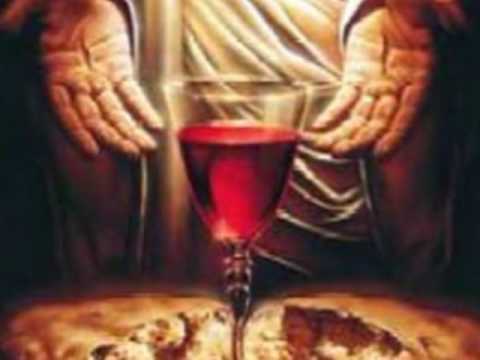
11 But when Christ came as high priest of the good things that are now already here,[a] he went through the greater and more perfect tabernacle that is not made with human hands, that is to say, is not a part of this creation. 12 He did not enter by means of the blood of goats and calves; but he entered the Most Holy Place once for all by his own blood, thus obtaining[b] eternal redemption. 13 The blood of goats and bulls and the ashes of a heifer sprinkled on those who are ceremonially unclean sanctify them so that they are outwardly clean. 14 How much more, then, will the blood of Christ, who through the eternal Spirit offered himself unblemished to God, cleanse our consciences from acts that lead to death,[c] so that we may serve the living God!
15 For this reason Christ is the mediator of a new covenant, that those who are called may receive the promised eternal inheritance—now that he has died as a ransom to set them free from the sins committed under the first covenant.
16 In the case of a will,[d] it is necessary to prove the death of the one who made it, 17 because a will is in force only when somebody has died; it never takes effect while the one who made it is living. 18 This is why even the first covenant was not put into effect without blood. 19 When Moses had proclaimed every command of the law to all the people, he took the blood of calves, together with water, scarlet wool and branches of hyssop, and sprinkled the scroll and all the people. 20 He said, “This is the blood of the covenant, which God has commanded you to keep.”[e] 21 In the same way, he sprinkled with the blood both the tabernacle and everything used in its ceremonies. 22 In fact, the law requires that nearly everything be cleansed with blood, and without the shedding of blood there is no forgiveness.
23 It was necessary, then, for the copies of the heavenly things to be purified with these sacrifices, but the heavenly things themselves with better sacrifices than these. 24 For Christ did not enter a sanctuary made with human hands that was only a copy of the true one; he entered heaven itself, now to appear for us in God’s presence. 25 Nor did he enter heaven to offer himself again and again, the way the high priest enters the Most Holy Place every year with blood that is not his own. 26 Otherwise Christ would have had to suffer many times since the creation of the world. But he has appeared once for all at the culmination of the ages to do away with sin by the sacrifice of himself. 27 Just as people are destined to die once, and after that to face judgment, 28 so Christ was sacrificed once to take away the sins of many; and he will appear a second time, not to bear sin, but to bring salvation to those who are waiting for him.

Okay so here comes the question
I know what my answer is!
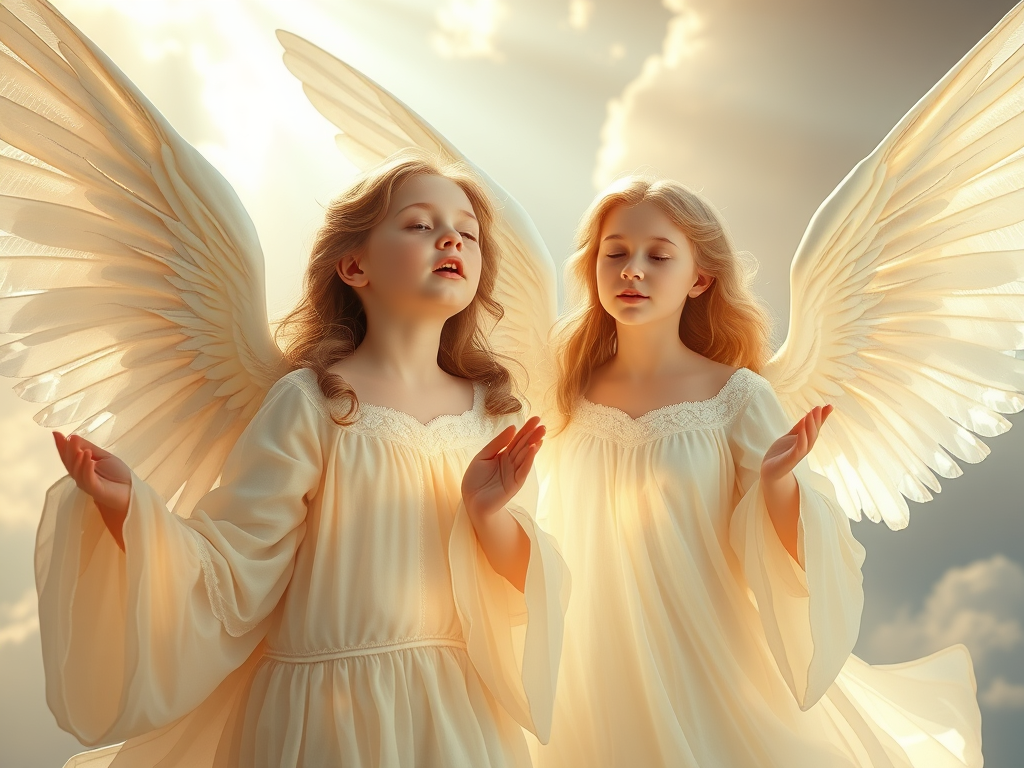
“Hark! The Herald Angels Sing” is a beloved Christmas carol with a fascinating history. The lyrics were written by Charles Wesley, one of the founders of Methodism, in 1739. Originally, the carol began with the line “Hark! how all the welkin rings,” with “welkin” being an old English term for the sky or heavens. Wesley’s intention was to emphasize the heavenly celebration of Christ’s birth.
The melody we know today was adapted by Felix Mendelssohn, a German composer, in 1855. Mendelssohn had composed the music for a secular cantata celebrating the invention of the printing press. English musician William H. Cummings later adapted Mendelssohn’s music to fit Wesley’s lyrics, creating the version we sing today.
The carol’s joyful and triumphant tone captures the essence of the Christmas story, celebrating the birth of Jesus and the message of peace and goodwill. It’s a staple in Christmas Eve services and caroling traditions around the world.
Near the end of 1843, a church organ in southern France was renovated. Even though Cappeau showed no interest in religion, he was asked by the parish priest to write a Christmas poem; which he did. Shortly thereafter, Adam wrote the music and the song was first performed in 1857.
O Holy Night is one of the most well-known Christmas carols reflecting on Jesus’ birth and the redemption of humanity.
O Holy Night! The stars are brightly shining, It is the night of the dear Savior’s birth.
“And in the same region there were shepherds out in the field, keeping watch over their flock by night.” (Luke 2:8)
Long lay the world in sin and error pining. ’Til He appeared and the soul felt its worth.
“And to Adam he said, “Because you have listened to the voice of your wife and have eaten of the tree of which I commanded you, ‘You shall not eat of it,’ cursed is the ground because of you; in pain you shall eat of it all the days of your life; thorns and thistles it shall bring forth for you; and you shall eat the plants of the field.” (Genesis 3:17-18)
A thrill of hope the weary world rejoices, For yonder breaks a new and glorious morn.
“For the creation waits with eager longing for the revealing of the sons of God. For the creation was subjected to futility, not willingly, but because of him who subjected it, in hope that the creation itself will be set free from its bondage to corruption and obtain the freedom of the glory of the children of God.” (Romans 8:19-21)
Fall on your knees! Oh, hear the angel voices! O night divine, O night when Christ was born; O night divine, O night, O night divine!
“So that at the name of Jesus every knee should bow, in heaven and on earth and under the earth, and every tongue confess that Jesus Christ is Lord, to the glory of God the Father.” (Philippians 2:10-11)
Truly He taught us to love one another, His law is love and His gospel is peace.
“A new commandment I give to you, that you love one another: just as I have loved you, you also are to love one another. 35 By this all people will know that you are my disciples, if you have love for one another.” (John 13:34-35)
Chains he shall break, for the slave is our brother. And in his name all oppression shall cease.
“No longer as a slave but more than a slave, as a beloved brother–especially to me, but how much more to you, both in the flesh and in the Lord.” (Philemon 1:16)
Sweet hymns of joy in grateful chorus raise we, With all our hearts we praise His holy name.
“Let the word of Christ dwell in you richly, teaching and admonishing one another in all wisdom, singing psalms and hymns and spiritual songs, with thankfulness in your hearts to God.” (Colossians 3:16)
O Holy night! The stars are brightly shining
It is the night of our dear Savior’s birth
Long lay the world in sin and error pining
‘Til He appears and the soul felt its worth
A thrill of hope the weary world rejoices
For yonder breaks a new and glorious morn
Fall on your knees; O hear the Angel voices!
O night divine, O night when Christ was born
O night, O Holy night, O night divine!
[Verse 2]
Led by the light of Faith serenely beaming
With glowing hearts by His cradle we stand
So led by light of a star sweetly gleaming
Here come the Wise Men from Orient land
The King of kings lay thus in lowly manger
In all our trials born to be our friend
He knows our need, to our weakness is no stranger
Behold your King; before Him lowly bend
Behold your King; before Him lowly bend
[Verse 3]
Truly He taught us to love one another;
His law is love and His Gospel is Peace
Chains shall He break, for the slave is our brother
And in His name, all oppression shall cease
Sweet hymns of joy in grateful chorus raise we
Let all within us Praise His Holy name
Christ is the Lord; O praise His name forever!
His power and glory evermore proclaim
His power and glory evermore proclaim 3
8 And there were shepherds living out in the fields near by, keeping watch over their flocks at night. 9 An angel of the Lord appeared to them, and the glory of the Lord shone around them, and they were terrified. 10 But the angel said to them, ‘Do not be afraid. I bring you good news that will cause great joy for all the people. 11 Today in the town of David a Saviour has been born to you; he is the Messiah, the Lord. 12 This will be a sign to you: you will find a baby wrapped in cloths and lying in a manger.’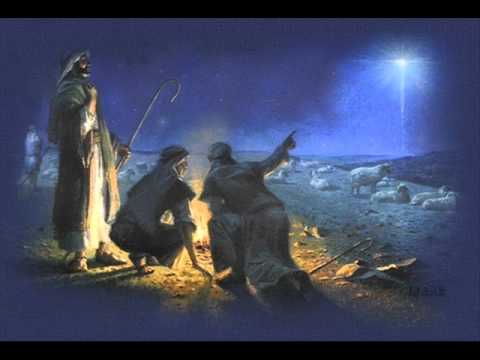
13 Suddenly a great company of the heavenly host appeared with the angel, praising God and saying,
14 ‘Glory to God in the highest heaven,
and on earth peace to those on whom his favour rests.’
15 When the angels had left them and gone into heaven, the shepherds said to one another, ‘Let’s go to Bethlehem and see this thing that has happened, which the Lord has told us about.’
16 So they hurried off and found Mary and Joseph, and the baby, who was lying in the manger. 17 When they had seen him, they spread the word concerning what had been told them about this child, 18 and all who heard it were amazed at what the shepherds said to them. 19 But Mary treasured up all these things and pondered them in her heart. 20 The shepherds returned, glorifying and praising God for all the things they had heard and seen, which were just as they had been told.
This is not the original carol but never the less I hope you like it
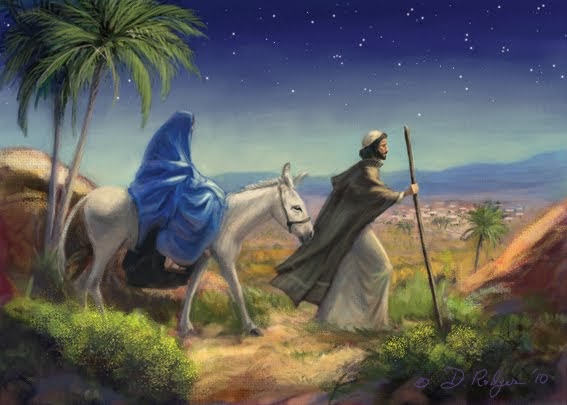
2 In those days Caesar Augustus issued a decree that a census should be taken of the entire Roman world. 2 (This was the first census that took place while[a] Quirinius was governor of Syria.) 3 And everyone went to their own town to register.
4 So Joseph also went up from the town of Nazareth in Galilee to Judea, to Bethlehem the town of David, because he belonged to the house and line of David. 5 He went there to register with Mary, who was pledged to be married to him and was expecting a child. 6 While they were there, the time came for the baby to be born, 7 and she gave birth to her firstborn, a son. She wrapped him in cloths and placed him in a manger, because there was no guest room available for them.
Can you imagine the distance Mary & Joseph had to travel from Nazareth to Bethlehem (about 90 odd miles) on mostly hot days with only a donkey as a way of transport, no cars, buses, trains or planes to get there. What we must remember is it is with God’s guidance they both arrived in Bethlehem safely
How far is it to Bethlehem?
Not very far.
Shall we find the stable room
Lit by a star?
Can we see the little Child?
Is He within?
If we lift the wooden latch
May we go in?
May we stroke the creatures there
Ox, ass, or sheep?
May we peep like them and see
Jesus asleep?
If we touch His tiny hand
Will He awake?
Will He know we’ve come so far
Just for His sake?
Great kings have precious gifts
And we have naught
Little smiles and little tears
Are all we brought.
For all weary children
Mary must weep
Here, on His bed of straw
Sleep, children, sleep.
God in His mother’s arms
Babes in the byre
Sleep, as they sleep who find
Their heart’s desire.
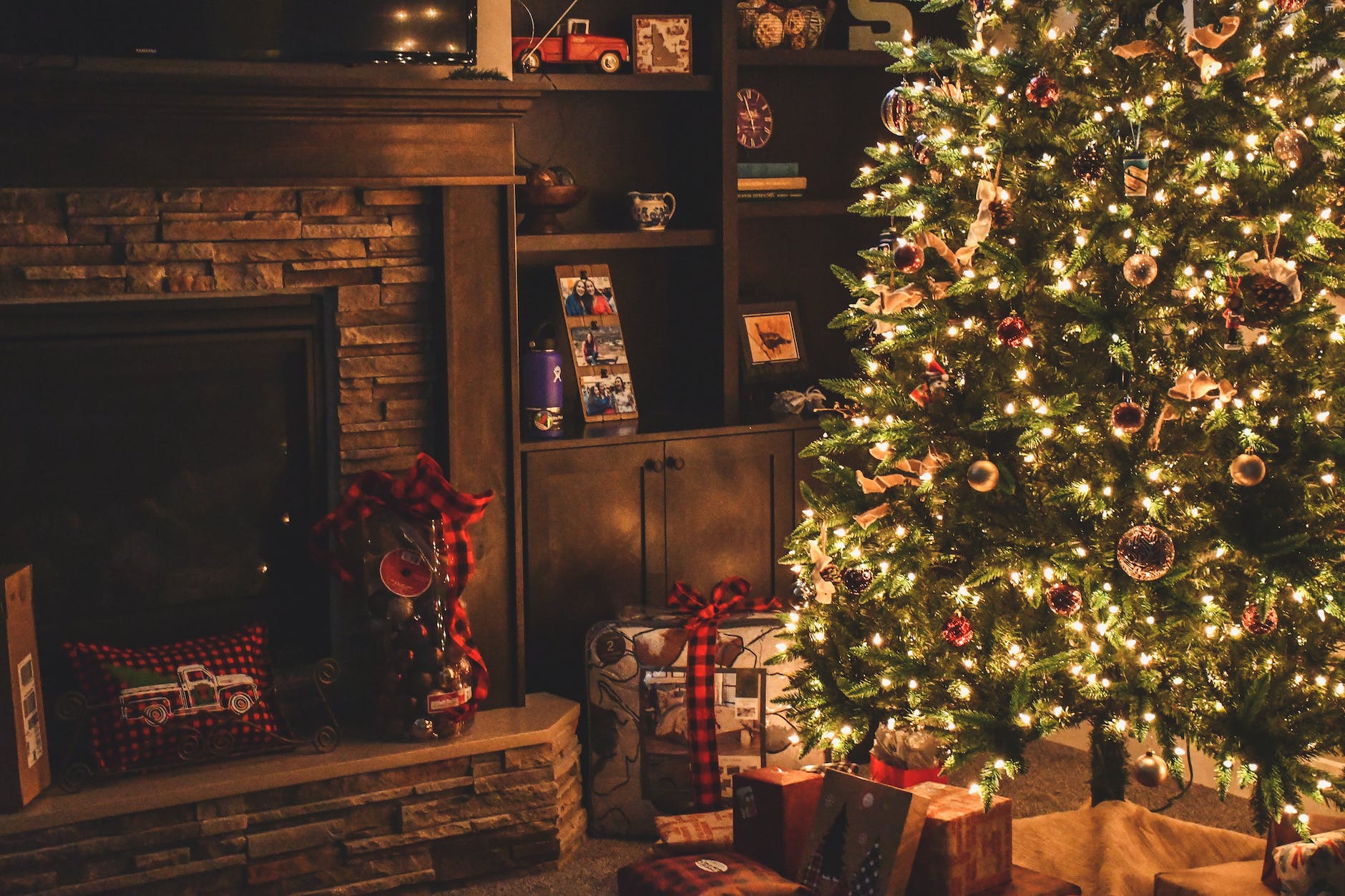
The Christmas Tree symbolizes the birth of Jesus Christ. It is a representation of the tree in the Garden of Eden and it is also a reminder that we are all children of God who should love one another. Read more in detail here: what does the christmas tree symbolize in the bible.
We all adore Christmas, and what is one of the most important aspects of the holiday season? Of course, there’s the Christmas tree! But what does the tree that decorates our home during the holidays really represent? What is the significance of the Christmas tree?
Winter celebrations were associated with the use of evergreens and greenery, since they were plants that lasted all year and were thought to protect the home from bad spirits, witches, ghosts, and diseases.
People thought that since these plants remained green throughout the year, particularly throughout the winter, they would be protected; it was not only a symbol of protection, but also of health.
Originally, the Christmas tree was a pagan religious emblem of festivity. It is mostly recognized as a German custom.
If they couldn’t locate a plant to symbolize the tree, the Christmas tree became a pyramid tree. People would make a tree-like pyramid out of wood and adorn it with nuts, gingerbread, apples, paper, and candles.
On Christmas Eve, the trees and pyramids were typically paraded throughout town to display to the other families as a symbol of good health, to ward off bad spirits. Throughout the 16th century, it grew in popularity, eventually becoming very popular among aristocracy and royalty.
For the Saturnalia festival, Romans used evergreens to adorn their temples, while Ancient Egyptians used green palm rushes to decorate their temples as part of devotion to the God of Ra.
It is said that a guy named Martin Luther brought the first recorded Christmas tree inside and decorated it in the 16th century. He was reported to have seen the stars through the evergreen trees on his way home and returned home to tell his children that it reminded him of Jesus. People began to decorate trees with candles as a sign of inviting Jesus into their homes after he wrote a sermon for his church about the event. For Christians, the Christmas tree symbolizes Jesus and the light he gives to the world.
It originated from the custom of covering the tree or ‘Christmas pyramid’ with gingerbread, candles, and other decorations to resemble/replicate Jesus’ birth narrative. This was done so that as individuals went about presenting and showing off their Christmas trees/pyramids, they were encouraging others to come to the church to see their nativity play based on the Christmas narrative.
Though, as time passed, it became increasingly usual for households to retain their trees inside to adorn as their own, rather than as community showpieces.
Could you image trying to lug a Christmas tree around your block? It’s no wonder that we now keep our Christmas trees in our homes for our family to enjoy.
Nowadays, decorating the Christmas tree is such a significant occasion for families; it is the time of year when they all gather together to decorate the tree, which they then sit around and put gifts beneath as the centerpiece of their holiday celebration.
However, the root of why we place ornaments on the tree may be traced back to the 16th century. Europeans would use apples to adorn their trees to represent the paradise tree in the tale of Adam and Eve, as well as to remind people of the forbidden fruit Eve ate.
Christmas trees were subsequently adorned with delectable delicacies such as gingerbread stars, angels, and holly, as we know them today.
Glassblower Hans Greiner is believed to have developed the first glass ornament because he couldn’t afford to purchase apples and chose to manufacture his own. Others started to purchase his glass apples and other glass decorations that resembled fruit and nuts to symbolize the Christmas holiday after seeing his works.
Now, I’m not sure about you, but these glass apples and nuts sound very similar to the ornaments we purchase now, so it’s no surprise they were popular.
Putting lights on a tree harkens back to the concept of the lights symbolizing Jesus as Light in the Dark. The stars and planets in the sky were represented by the lights and decorations on the tree. Many Christians would put a manger beneath their trees to represent Jesus Christ’s advent under the stars.
However, it wasn’t until the mid-nineteenth century that Americans and Britons began to adorn their Christmas trees! After Prince Albert, Queen Victoria’s husband, brought the custom over from Germany, it became popular. (For additional information on how to celebrate Christmas Victorian style, see How To Celebrate Christmas Victorian Style.)
In America, however, putting lights on Christmas trees (candles) needed buckets of water and sand since it was not unusual for the trees to catch fire, which they did often.
It wasn’t until 1882 when Thomas Edison’s colleague Edward Johnson adorned his Christmas tree with electric lights, earning him the moniker “Father of the Electric Christmas Tree.” The tradition of adorning Christmas trees with electric lights spread from there, and by 1920, electric Christmas lights were available in every shop.
Tinsel was invented in the 17th century in Europe, and it was made by pounding silver alloy until it was paper-thin and then cutting it into strips. It was used as a Christmas tree ornament to reflect the flickering and glistening candle flames. They seemed as if there were sparkling stars in the sky, but they were on their trees.
Obviously, we can now buy tinsel in nearly every color conceivable, but the combination of tinsel and lights can produce a sparkling star appearance, making this time of year even more wonderful for you and your family.
 Christian Devotions, Health and General issues of the day